

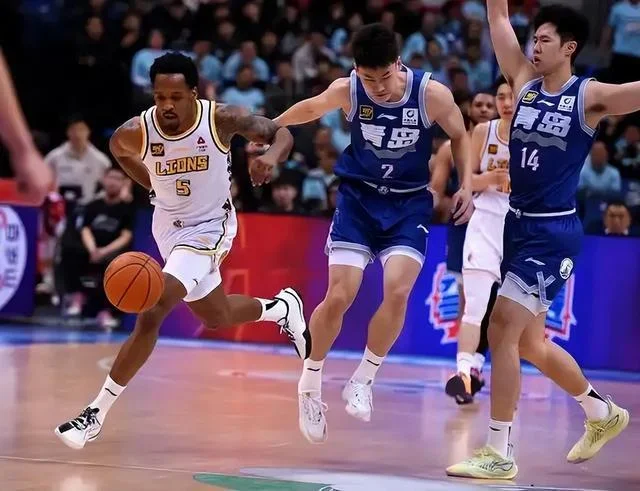
In Game 2 of the CBA playoff quarterfinals in Jinan, Shanghai came out firing from the opening tip, building a commanding 29-12 lead in the first quarter that left Shandong stunned.
By the end of the game, Shanghai’s balanced attack produced a 96-68 victory, sweeping the series 2-0 and becoming the first team to punch a ticket to the semifinals.

This was no fluke. It was a clear demonstration of Shanghai’s superiority in system play, understanding of the rules, and in-game adjustments.
**Short-Series Rules and On-Court Details**
Under this season’s CBA playoff format, the quarterfinals are a best-of-two series with no room for a Game 3. Winning the first game puts a team in a position to close out, demanding a quick, mistake-free start.
Shandong’s issues were evident from the first quarter. Coming off a grueling 12-to-8 series where they upset the regular-season runner-up Liaoning, Shandong appeared fatigued and emotionally unsettled. They committed three more fouls than Shanghai in the opening period, many of them unnecessary reach-ins that disrupted their defensive rhythm.
Bench discipline also told the story. Shanghai’s reserves remained quiet and focused, with coaches communicating in low tones. In contrast, Shandong’s bench saw players shouting in frustration, which can influence referees’ calls and unsettle teammates.
Statistically, Shanghai had five players in double figures: Lofton with 20 points, 9 rebounds, and 5 assists; Wang Zhelin with 14 points and 6 rebounds; Li Tianrong with 14; and Goodwin with 13 points and 7 assists. Their scoring was well-distributed, a hallmark of their system.
Shandong, meanwhile, had only two players reach double digits—Chen Linjian and Johnson. Tao Hanlin fought for 12 points and 7 rebounds but found his finishing space severely limited by Shanghai’s double-teams. Gao Shiyan’s 7 points and 5 assists fell short of expectations.
Shandong’s reliance on individual stars was exposed in the short series. Their offense relied almost exclusively on Chen Linjian and Johnson. When Shanghai tightened its defense, Shandong’s attack collapsed.
In Game 1, Shanghai had only scraped a 5-point road win, but a first-quarter collapse in Game 2 left Shandong no chance to recover—a cruel reality of the short series where early mistakes can doom a team’s entire run.
**From Regular Season to Playoff Transformation**
Shanghai finished the regular season with a league-best 38-4 record, earning them extended rest and tactical flexibility. Shandong, seeded eighth, had upset Liaoning in the first round partly due to Liaoning’s rotation decisions, but that strategy proved ineffective against Shanghai.
While Shandong showed grit in eliminating Liaoning, their weaknesses were magnified under the pressure of a short series.
**Coach Li Chunjiang’s System and Player-to-Coach Transition**
Shanghai head coach Li Chunjiang, who transitioned from player to coach over 20 years ago, was a key factor. A former star with Liaoning’s “Golden Generation” and a national team member who won an Asian Games gold, Li later served as an assistant coach for Guangdong before becoming head coach and winning seven CBA titles. He took over Shanghai in 2021.
His experience as a former player gives him deep insight into players’ mindsets and CBA rules. The team-oriented system he built emphasizes discipline, efficiency, and execution—all on display in this game.
The typical path for a Chinese player-turned-coach—from youth team coach to assistant to head coach—is one Li embodies perfectly. His seamless rotations and ability to keep substitutes in rhythm reflect decades of tactical wisdom.
**Broader Implications for CBA Teams**
This series highlighted common weaknesses across CBA teams, including Shandong’s ineffective foreign player pairing with domestic stars, insufficient wing play in half-court and transition offense, and lack of bench depth.
Shanghai’s 96-68 statement victory stands as a perfect example of team basketball in action. For Shandong, despite their early exit, their upset of Liaoning remains a bright spot. Their shortcomings now provide a clear roadmap for off-season improvement.
Next up for Shanghai is the winner of the Beijing-Guangdong series. The semifinals will test their interior rotation and perimeter shooting under even greater intensity.
For the entire CBA, this series serves as a reminder: regular-season advantages don’t guarantee playoff success. Only by filling gaps and building a complete system can a team go deep.
Fans eagerly await the semifinals to see more high-level team basketball, while all teams can take lessons from this matchup to elevate the league’s overall competitiveness.
